Commercial gym setup in India can cost anywhere from ₹8 lakh for a small neighbourhood gym to ₹3 crore or more for a large fitness centre. The final investment depends on the gym’s size, location, equipment quality, interiors, amenities, and business model.
As a practical starting point, a small commercial gym of 40–80 m² may require ₹8–18 lakh, a medium gym of 150–350 m² may require ₹25–60 lakh, while a large fitness centre of 400–1,200 m² can require ₹70 lakh to ₹3+ crore.
These figures are indicative rather than fixed prices. Equipment specifications, brands, construction costs, import duties, city, installation requirements and market conditions can significantly affect the final gym quotation.
Quick answer: In India, a commercial gym typically costs about ₹8–18 lakh for a small setup, ₹25–60 lakh for a medium setup, and ₹70 lakh–₹3+ crore for a large fitness centre, excluding land acquisition and recurring operating expenses.
Commercial Gym Setup Cost in India at a Glance
The easiest way to estimate your investment is to start with the size and intended member capacity.
| Gym Size | Approx. Area | Member Capacity | Estimated Setup Cost |
|---|---|---|---|
| Small | 40–80 m² | 30–80 | ₹8–18 lakh |
| Medium | 150–350 m² | 100–300 | ₹25–60 lakh |
| Large | 400–1,200 m² | 300–1,200 | ₹70 lakh–₹3+ crore |
These estimates cover above-medium-quality commercial fitness equipment, basic fit-out, flooring, lighting and AC provisions, initial consumables, small furniture, and initial equipment transportation and installation.
They generally exclude land acquisition, rent, salaries, utilities and other recurring operating expenses.
What Does a Commercial Gym Setup Cost Include?
A full gym setup is much more than purchasing treadmills and weight machines. Your initial capital expenditure can include:
- Gym flooring
- Mirrors and interiors
- Electrical work and lighting
- Air conditioning and ventilation
- Cardio equipment
- Strength machines
- Free weights and racks
- Functional training equipment
- Reception and lockers
- CCTV and access control
- Audio/visual systems
- Membership management software
- Installation and equipment testing
- Professional fees
- Licences and insurance
Therefore, comparing suppliers only on the equipment price can give you an incomplete picture.
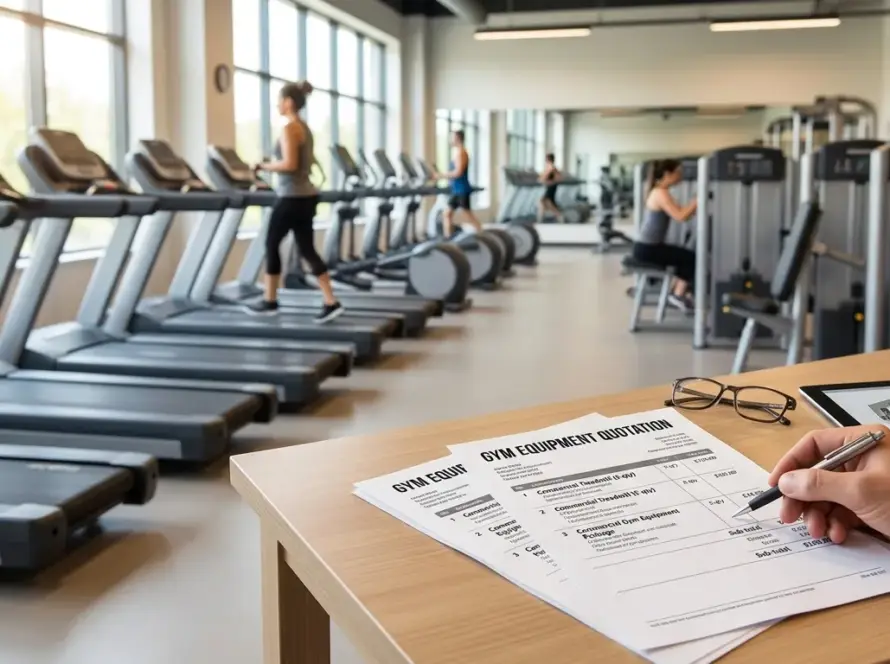
A good gym quotation should clearly identify equipment specifications, quantities, installation, transportation, warranty, taxes and after-sales service.
Commercial Gym Equipment Cost Breakdown
Equipment is usually one of the largest components of the initial investment. For a standard commercial gym, equipment can account for roughly 30–50% of the initial capital expenditure.
Cardio Equipment
Cardio machines for gyms can include treadmills, cross trainers, upright bikes, recumbent bikes and rowing machines.
| Equipment | Typical Unit Price |
|---|---|
| Commercial treadmill | ₹70,000–₹2.5 lakh |
| Spin bike | ₹25,000–₹80,000 |
| Rower | ₹60,000–₹1.8 lakh |
Approximate cardio budgets:
- Small gym: ₹2–8 lakh
- Medium gym: ₹6–25 lakh
- Large gym: ₹20–80+ lakh
The right quantity matters as much as the individual machine price. A gym targeting peak-hour usage needs sufficient cardio capacity without unnecessarily filling valuable floor space.
Strength Machines
Strength training equipment includes selectorized machines, plate-loaded machines, cable stations and functional rigs.
| Equipment | Typical Unit Price |
|---|---|
| Selectorized chest press/lat pulldown | ₹1.2–₹4.5 lakh |
| Functional rig/multi-station | ₹2–₹12 lakh |
Indicative strength equipment budgets range from approximately ₹3–12 lakh for a small gym, ₹10–50 lakh for a medium gym, and ₹30–120+ lakh for a large facility.
Free Weights and Racks
A commercial strength area may require:
- Dumbbells
- Olympic plates
- Barbells
- Benches
- Power racks
- Squat racks
- Storage systems
Typical budgets are:
- Small gym: ₹1–6 lakh
- Medium gym: ₹4–20 lakh
- Large gym: ₹10–60+ lakh
For commercial use, durability should be considered alongside purchase price.
How Much Does Gym Flooring and Interior Fit-Out Cost?
Flooring and fit-out can have a substantial impact on the overall budget.
Commercial gym flooring may use rubber tiles, EPDM or PU systems. Typical flooring costs can range from approximately ₹120–₹300 per sq. ft.
Other fit-out expenses include:
- Mirrors
- Partitions
- Painting
- Lighting
- Plumbing
- Reception area
- Changing rooms
- AC provisions
- Electrical upgrades
A broad fit-out estimate is approximately ₹400–₹1,100 per sq. ft., depending on the specification and finish.
Premium interiors can push this considerably higher.
Small Gym Setup Cost: ₹8–18 Lakh
A small commercial gym is generally suitable for a neighbourhood-focused business with around 30–80 members initially or a controlled membership capacity.
A representative 60 m² setup could look like this:
| Component | Approx. Cost |
|---|---|
| Fit-out & flooring | ₹2.5–4.5 lakh |
| Equipment | ₹3–7 lakh |
| Ancillary items | ₹0.5–1 lakh |
| Installation & professional fees | ₹0.5–1 lakh |
| Indicative total | ₹8–13.5 lakh |
The upper end of the overall ₹8–18 lakh range allows for better equipment, stronger interiors, additional cardio machines or higher-specification installations.
For entrepreneurs entering the fitness market for the first time, this model can also support phased equipment procurement.
Medium Gym Setup Cost: ₹25–60 Lakh
A medium-sized gym typically offers a more balanced combination of cardio, strength, free weights and functional training.
For a 150–350 m² facility, equipment selection could include:
- 8–12 cardio machines
- 10+ selectorized machines
- Functional rigs
- Free-weight section
- Benches and racks
- Functional training accessories
- Group-training equipment
A representative 250 m² project might look like this:
| Component | Approx. Cost |
|---|---|
| Fit-out & flooring | ₹10–28 lakh |
| Equipment | ₹18–40 lakh |
| Ancillary, AV & software | ₹2–5 lakh |
| Professional fees & installation | ₹2–3 lakh |
| Indicative total | ₹32–76 lakh |
The broader planning range of ₹25–60 lakh represents a typical medium commercial gym, while premium specifications can push the actual investment beyond ₹60 lakh.
Large Fitness Centre Setup Cost: ₹70 Lakh–₹3+ Crore
Large gyms and fitness centres require significantly more than additional equipment.
They may include:
- Dedicated cardio zones
- Heavy strength areas
- Functional training zones
- Group exercise studios
- Spin studios
- Changing rooms
- Advanced AV systems
- Access control
- Premium interiors
- Larger HVAC systems
- Multiple staff areas
For a 600 m² facility, one possible build-up is:
| Component | Approx. Cost |
|---|---|
| Fit-out & flooring | ₹26–66 lakh |
| Equipment | ₹55–180 lakh |
| Studios & ancillary systems | ₹10–30 lakh |
| AV, warranties & other costs | ₹5–10 lakh |
| Indicative total | ₹91–286+ lakh |
Premium fitness centres with international equipment brands, extensive studios or luxury amenities can exceed ₹3 crore.
Other Costs to Include in Your Full Gym Setup Budget
Equipment and interiors are important, but they are not the only expenses.
HVAC, Electrical and Safety
Depending on the property, you may need ₹2–20 lakh or more for AC and ventilation upgrades, plus electrical work, backup power and safety systems.
Fire safety and compliance costs can also vary considerably by city and property.
Reception, Lockers and Furniture
Budget approximately:
- Small gym: ₹1–6 lakh
- Medium gym: ₹3–20 lakh
- Large gym: ₹8–50 lakh
The final amount depends heavily on locker count, changing rooms, shower facilities and interior specifications.
Technology
Membership software, billing, CCTV, access control and website systems may cost anywhere from ₹50,000 to several lakh rupees, depending on the technology stack.
Membership management software alone can range from basic SaaS subscriptions to substantial bespoke systems.
Professional Fees and Compliance
Architectural, interior-design and project-management fees can typically be around 4–10% of fit-out costs.
Depending on the location and business structure, you may also need to budget for applicable registrations, licences, clearances and insurance.
How to Choose the Right Commercial Fitness Equipment Supplier
Choosing a commercial fitness equipment supplier should not be based only on the lowest quotation.
Consider these factors:
- Commercial-grade construction – Equipment should be designed for high-frequency use.
- Warranty terms – Check parts, labour and coverage periods separately.
- Service network – A strong local service presence can reduce downtime.
- Spare parts availability – Ask about the availability and lead time of critical components.
- Installation – Confirm whether transportation, assembly and testing are included.
- Equipment specifications – Compare motors, frame construction, weight capacity and other relevant specifications.
- Future scalability – Your supplier should be able to support expansion.
- Total cost of ownership – Consider maintenance, repairs and replacement costs, not just the purchase price.
A reliable commercial fitness equipment supplier should be able to provide an itemised proposal rather than a single lump-sum number.
How to Reduce Commercial Gym Setup Costs Without Cutting Quality
Reducing the budget does not necessarily mean buying the cheapest equipment.
Buy a Balanced Equipment Mix
You can combine reputable equipment with selected premium or imported machines where they add genuine value.
Consider Commercial Equipment Planner
Well-maintained commercial gym equipment that is recommended by expert consultants can potentially reduce equipment expenditure by 30–60%, depending on space, brand and availability.
However, inspect equipment carefully and verify service history before purchase.
Phase Your Setup
You do not necessarily need every specialist machine on day one.
Start with core cardio, strength, free-weight and functional equipment. Add specialised equipment as membership and revenue increase.
Negotiate the Complete Package
Instead of negotiating each machine separately, ask your supplier for a complete package covering:
- Equipment
- Transportation
- Installation
- Warranty
- Preventive maintenance
- Spare parts
- Service contracts
This can produce better commercial terms than purchasing individual items.
What Should a Gym Quotation Include?
Before approving a supplier, ask for an itemised gym quotation.
At minimum, it should show:
| Quotation Item | What to Check |
|---|---|
| Equipment | Brand, model, quantity |
| Specifications | Technical details and capacity |
| Price | Unit and total price |
| GST/taxes | Clearly stated |
| Delivery | Location and timeline |
| Installation | Included or additional |
| Warranty | Parts and labour |
| AMC | Annual maintenance terms |
| Spare parts | Availability |
| Payment terms | Advance and balance |
| Validity | Quotation expiry date |
Getting 2–5 quotations can help you compare specifications rather than simply comparing prices.
Don’t Forget Your First 6–12 Months of Operating Costs
The setup budget is only the beginning.
A new gym also needs sufficient working capital for:
- Rent
- Salaries
- Electricity and AC
- Marketing
- Maintenance
- Cleaning and consumables
- Software
- Loan EMIs
- Other operating expenses
For a medium gym, monthly operating burn can be roughly ₹2.5–10 lakh, depending on location, staffing and business model.
For financial planning, keeping a 12–18 month operating runway can provide a safer buffer than budgeting only for construction and equipment.
A Practical Checklist Before Starting Your Gym
Before placing your equipment order, work through these steps:
- Decide your gym size and expected member capacity.
- Define your target market and membership price.
- Finalise the location and understand its lease costs.
- Obtain multiple fit-out quotations on a per-square-foot basis.
- Shortlist at least three equipment suppliers.
- Request detailed equipment quotations.
- Compare warranty and after-sales support.
- Prepare a 12–24 month P&L and cash-flow projection.
- Keep a contingency reserve of around 10–20%.
- Decide which equipment can be purchased in phases.
Most importantly, avoid finalising the equipment list before understanding your available floor area and target customer.
A well-designed gym uses its space efficiently rather than simply filling it with machines.
Frequently Asked Questions
How much does it cost to set up a commercial gym in India?
A small commercial gym may cost approximately ₹8–18 lakh, a medium gym ₹25–60 lakh, and a large fitness centre ₹70 lakh to ₹3+ crore. Premium gyms can cost substantially more.
How much does commercial gym equipment cost in India?
Commercial equipment costs depend on the equipment mix and brand. A small gym may spend ₹3–12 lakh on core equipment, while a medium gym can spend ₹10–50 lakh or more. Large facilities can spend well above ₹1 crore on equipment alone.
What is included in a full gym setup?
A full gym setup can include commercial fitness equipment, flooring, interiors, electrical work, lighting, HVAC provisions, reception furniture, lockers, CCTV, software, installation and applicable professional services.
How much should I budget for gym flooring?
Commercial gym flooring can cost approximately ₹120–₹300 per sq. ft., while broader fit-out costs can reach ₹400–₹1,100 per sq. ft. depending on the property and finish.
Is it cheaper to buy used gym equipment?
It can be. Good-quality, serviced commercial equipment that is one to three years old may reduce equipment expenditure by approximately 30–60%. However, warranty, condition, spare parts and service availability should be checked carefully.
How many quotations should I get before buying gym equipment?
Ideally, compare at least three equipment quotations. For larger projects, obtaining four or five proposals can provide a better basis for comparing brands, specifications, warranties and service terms.
What should I look for in a commercial fitness equipment supplier?
Look beyond price. Evaluate commercial-grade durability, warranty, installation, after-sales service, spare-parts availability, service response times, equipment specifications and the supplier’s ability to support future expansion.
How much working capital does a new gym need?
Working capital depends on rent, salaries, utilities, marketing and other expenses. A new gym should ideally plan for several months of operating expenses, with 12–18 months of runway providing a more conservative financial buffer.
Plan Your Commercial Gym With the Right Equipment and Budget
The cost of a commercial gym setup in India depends on much more than the number of machines you purchase. Space, equipment quality, interiors, HVAC, staffing requirements, location and working capital all influence the investment.
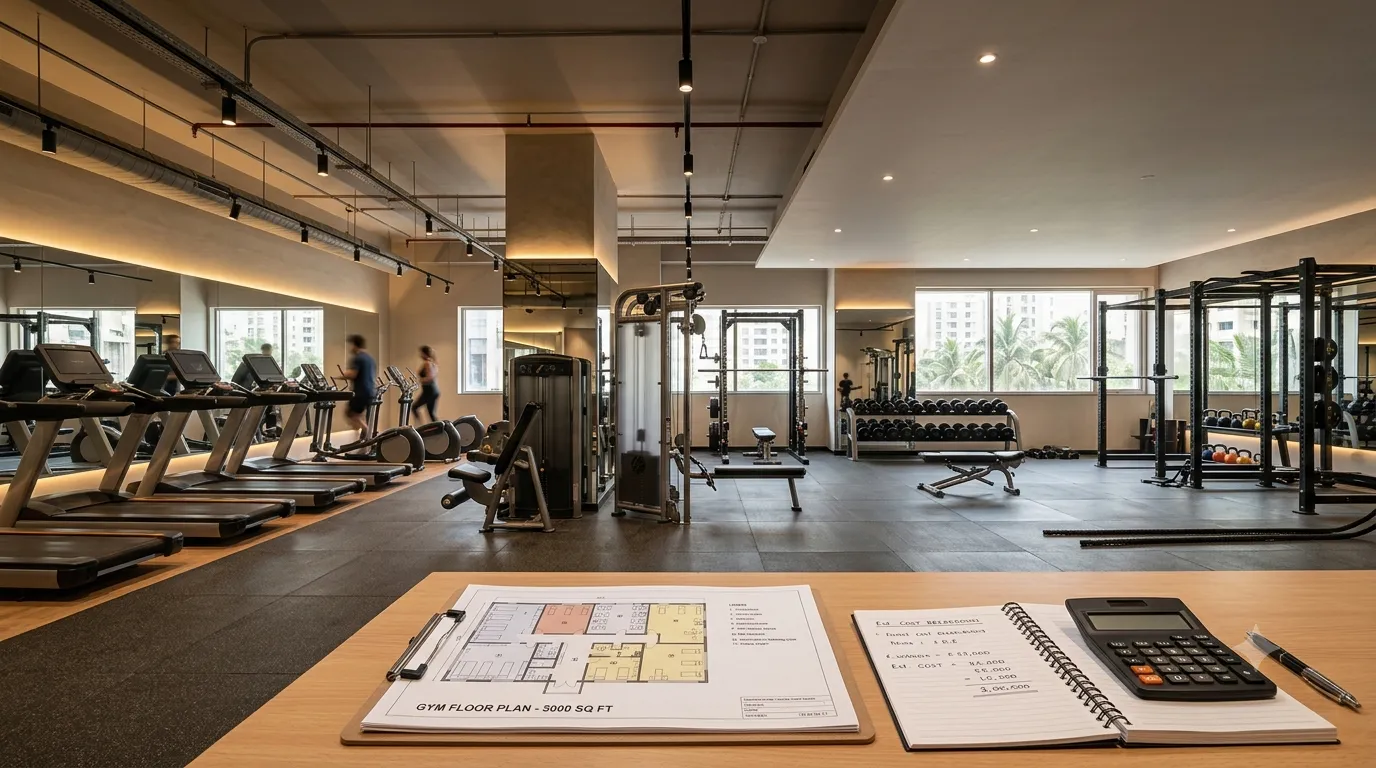
For that reason, start with your business model and floor plan, then develop the equipment list and obtain detailed quotations. A good supplier should help you balance equipment quality, member capacity, available space and budget.
If you are planning a new gym, expansion or complete fitness facility, contact us to discuss your requirements and get a customised commercial gym equipment proposal based on your space, budget and target audience.